.svg "NDL")
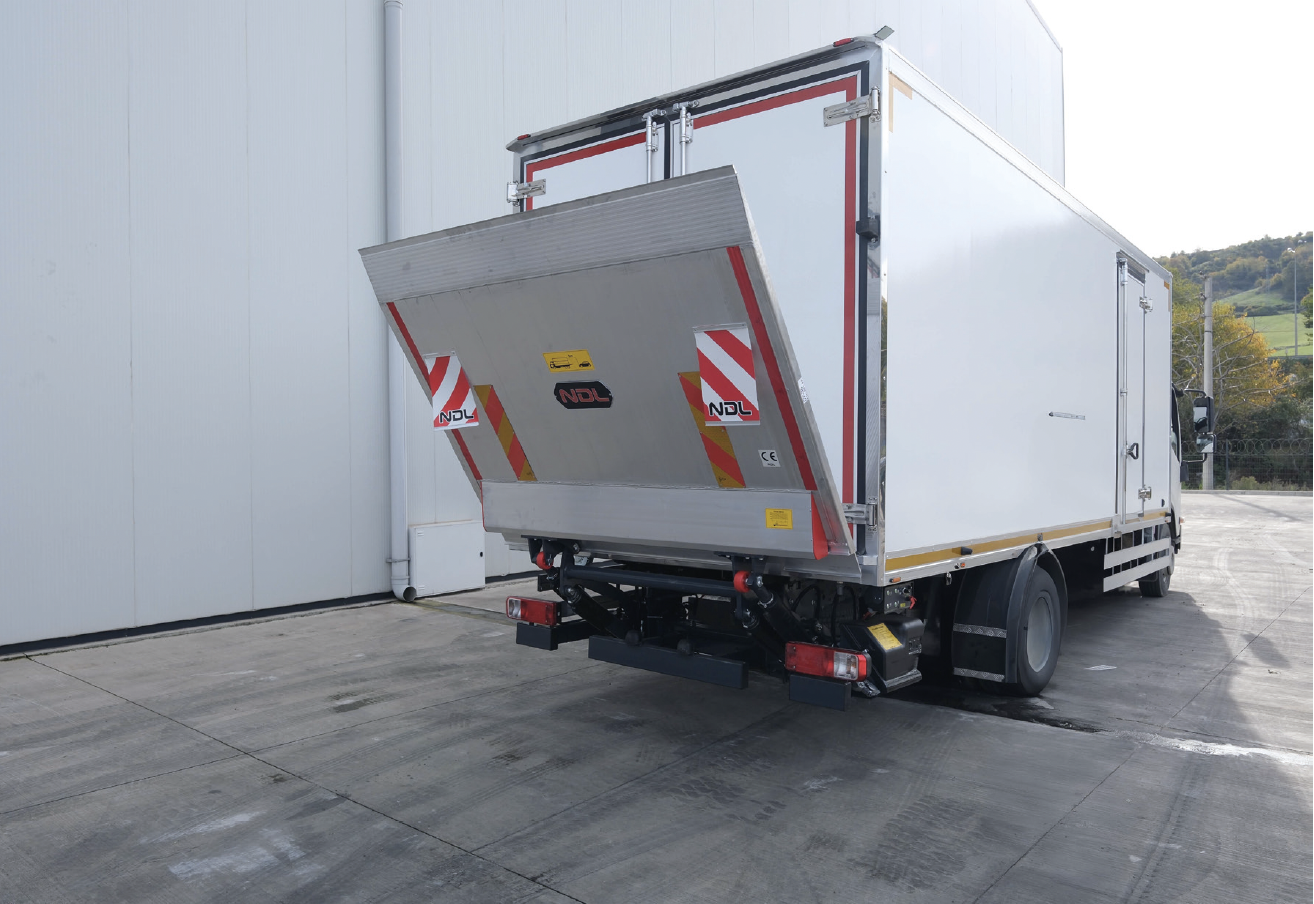
A delivery is not complete simply because the truck has reached its destination. In last-mile logistics, there is often a practical question to solve: How do you unload the goods when there is no forklift at the delivery site? Large distribution centres may have material-handling fleets, but a shop, restaurant, small workshop, construction site or temporary unloading area may not.
Vehicle-mounted tail lifts bridge the height difference between the vehicle's loading floor and the ground. When combined with appropriate pallet trucks, trolleys and safe procedures, they allow many suitable loads to be handled without a forklift at the destination. A tail lift is not a universal forklift replacement: stacking, high-rack placement and movements across a warehouse may still require other equipment.
Why forklift-free unloading matters
A delivery route rarely consists of identical destinations. A truck may leave a modern depot in the morning, visit a small retail outlet at lunchtime and finish at a workshop with limited loading infrastructure. Depending on a forklift being available at every stop can make that route harder to operate.
An appropriately specified lift mounted on the truck can provide a more consistent way to move suitable loads between the truck bed and ground level. That may be useful for packaged food, retail goods, furniture, white goods and suitably secured palletised products. It is essential, however, to check each load's mass, dimensions, centre of gravity and any accompanying handling equipment.
Four ways tail lifts support transport operations
1. More flexibility across delivery destinations
A vehicle-mounted platform gives drivers and logistics operators an additional unloading option at sites without permanent lifting equipment. Delivery methods can be planned in advance according to the vehicle, load and destination.
2. Controlled movement between vehicle and ground
A hydraulic platform can raise and lower suitable loads through the height difference between the ground and the vehicle floor. The transfer onto and off the platform, load restraint and movement on the ground still require appropriate safe handling practices.
3. Applications across different industries
Tail lift configurations exist for a variety of trucks and commercial vans. Appropriate selection depends not only on nominal rated capacity but also on mounting space, platform dimensions, cargo configuration and operating frequency.
4. Potential to reduce manual handling
EU-OSHA information on transport and musculoskeletal risks points to suitable handling aids as part of safer working practices. A well-matched tail lift, together with wheeled handling equipment where appropriate, can reduce the need to manually lift heavy goods. It cannot eliminate all handling risks.
Safety is about more than rated capacity
The UK's Health and Safety Executive (HSE) identifies loading and unloading as work involving potential risks from moving vehicles, unstable loads and falls. Its loading and unloading guidance emphasises safe places to work, controlling vehicle movement, load security and clear working arrangements.
The EU-OSHA workplace transport safety guidance similarly addresses vehicle movements and loading-related hazards. Operators should follow the equipment manufacturer's instructions, keep pedestrians away from operating areas, check the condition of the platform and ensure that loads cannot slip or roll.
In Europe, EN 1756-1:2021 specifies safety requirements covering the design, verification and safety information for vehicle-mounted tail lifts used for goods. Mentioning the standard is not a claim that any particular product is certified; product-specific technical documentation and conformity evidence should be checked separately.
How to select the right tail lift
Load mass and load centre: Check the load chart and the distance of the load centre from the vehicle. Include the weight of pallet trucks, trolleys and any other equipment placed on the platform.
Vehicle compatibility: Chassis configuration, body design, installation space, power supply and permitted axle loads all influence suitability.
Platform dimensions and site conditions: Match the platform to the cargo and any wheeled handling equipment. Consider ground condition, gradients, stability and safe access.
Daily operating pattern: Multiple stops per day demand attention to controls, maintenance, access, durability and service arrangements.
Cantilever, slider and column lifts: different needs, different designs
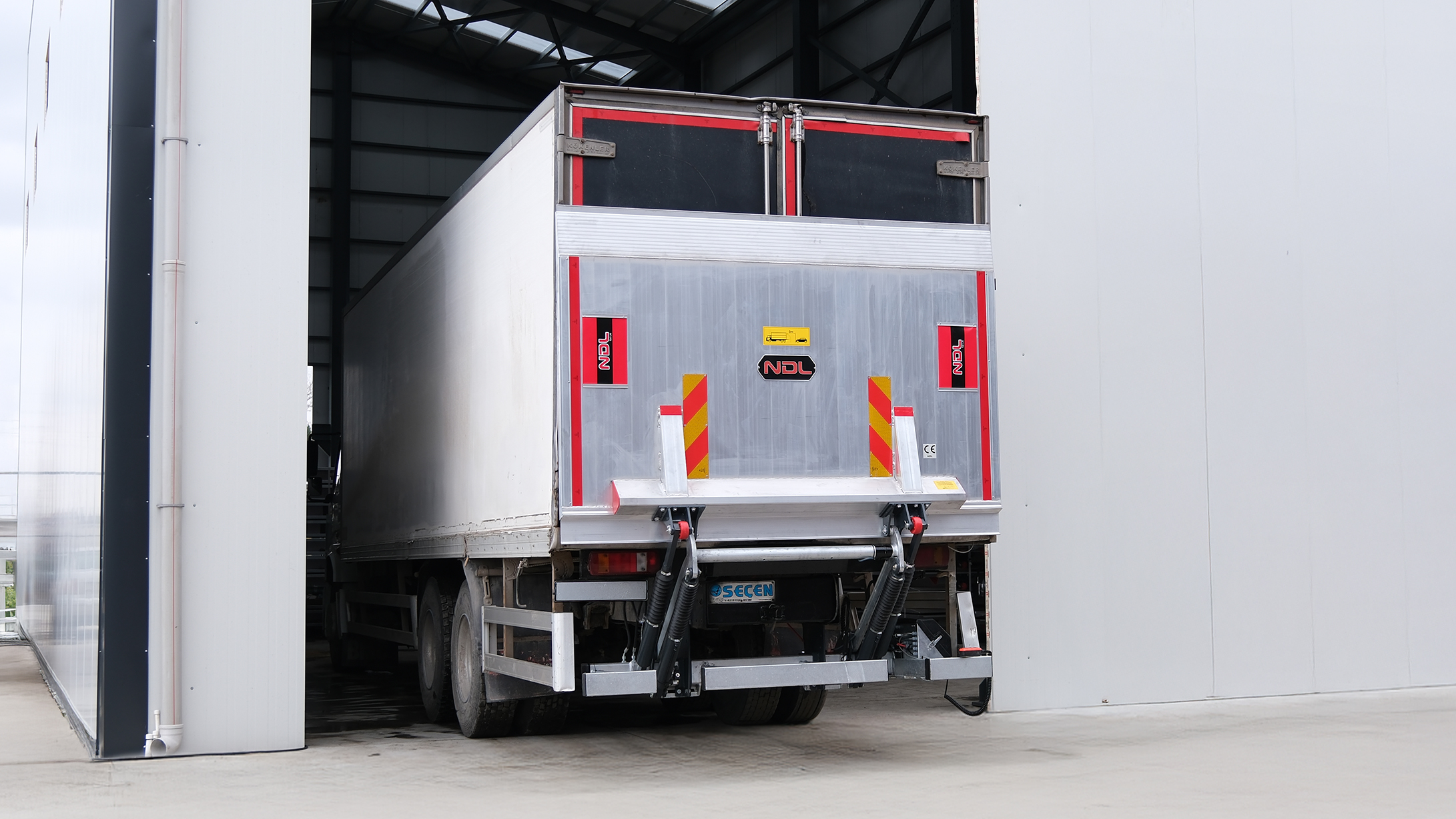
Cantilever tail lifts use an external platform at the rear of the vehicle and can suit conventional truck distribution. Slider lifts retract beneath the vehicle when not in use, which may help preserve access at the rear. Column lifts follow a vertical lifting arrangement and can suit particular cargo and vehicle layouts. The best option depends on an assessment of the complete transport application.
NDL Tail Lift: lifting solutions matched to your operation
NDL Tail Lift offers hydraulic lifting solutions for different commercial vehicles and transport requirements, including conventional cantilever lifts, slider systems, column models and panel-van applications. The goal is not to fit one lift to every job, but to identify a practical configuration for the actual cargo and working environment.
A delivery location without a forklift does not automatically have to become an obstacle. With the right equipment and a safe operating plan, transport operations can become more adaptable. Explore NDL's product range or contact the NDL team to discuss your vehicle, load and delivery conditions.
Sources and further reading
1. HSE — Loading and unloading safety
2. EU-OSHA — Workplace transport safety
3. NEN — EN 1756-1:2021
This article provides general information and does not replace the manufacturer's operating instructions, a vehicle-specific assessment or applicable local safety requirements.